
Table of Contents
ToggleSmart home tech examples are everywhere today, from voice assistants that play music on command to thermostats that learn daily routines. These devices save time, reduce energy costs, and add convenience to everyday tasks. The average household now owns multiple connected devices, and that number keeps growing. This guide explores the most practical smart home technologies available right now. Each category includes devices that deliver real value without unnecessary complexity.
Key Takeaways
- Smart home tech examples like voice assistants, smart lighting, and thermostats save time, reduce energy costs, and simplify daily routines.
- Smart thermostats can cut heating and cooling costs by 10-15% annually and typically pay for themselves within one to two years.
- Voice-controlled assistants from Amazon, Google, and Apple serve as central hubs that automate multiple devices with simple spoken commands.
- Home security smart home tech examples include video doorbells, smart locks, and cameras that provide real-time alerts and remote monitoring from anywhere.
- Smart kitchen and laundry appliances offer remote control, notifications, and guided features that reduce manual effort in household chores.
- Robot vacuums and smart climate systems use automation to maintain homes with minimal human involvement.
Voice-Controlled Assistants and Smart Speakers
Voice-controlled assistants serve as the central hub for many smart homes. Amazon Alexa, Google Assistant, and Apple Siri power devices that respond to spoken commands. Users can ask questions, set timers, play music, or control other connected devices, all without touching a screen.
Smart speakers like the Amazon Echo and Google Nest Audio offer excellent sound quality alongside their assistant features. These devices cost between $50 and $300 depending on size and audio performance. Many households place multiple speakers throughout their home to create a whole-house audio system.
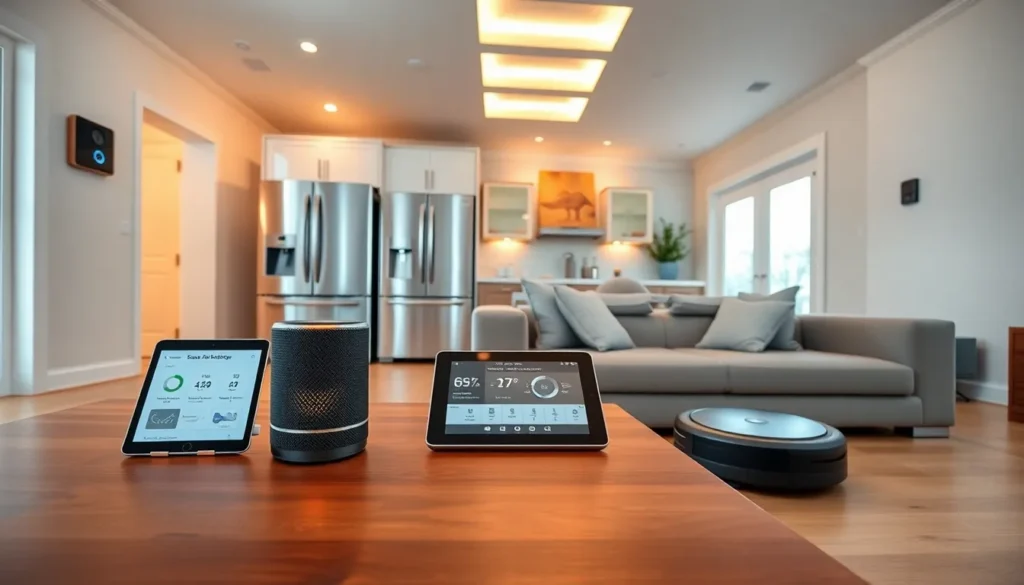
The real power of voice assistants shows up in automation. A simple phrase like “Good morning” can trigger lights to turn on, the coffee maker to start, and the thermostat to adjust. Smart home tech examples like these demonstrate how voice control removes friction from daily routines.
Smart displays add visual elements to voice assistants. The Amazon Echo Show and Google Nest Hub display recipes, video calls, security camera feeds, and weather forecasts. These screens make smart home tech examples more accessible for users who prefer visual feedback.
Privacy remains a common concern with always-listening devices. Most smart speakers include physical mute buttons that disable microphones. Users can also delete voice history through companion apps. Manufacturers continue to improve local processing, which reduces the amount of data sent to cloud servers.
Smart Lighting and Climate Control Systems
Smart lighting systems rank among the most popular smart home tech examples for good reason. They offer immediate benefits: energy savings, convenience, and customizable ambiance. Products like Philips Hue, LIFX, and Wyze bulbs connect to home networks and respond to app controls or voice commands.
Smart bulbs support millions of color options and adjustable brightness levels. Users can schedule lights to turn on at sunset or dim automatically at bedtime. Motion sensors add another layer of automation, lights activate when someone enters a room and shut off when the space is empty.
Climate control represents another high-impact category. Smart thermostats like the Nest Learning Thermostat and Ecobee save homeowners an average of 10-15% on heating and cooling costs annually. These devices learn household patterns and adjust temperatures automatically.
Geofencing features use smartphone location data to detect when residents leave or return home. The thermostat lowers energy use during empty hours and returns to comfortable settings before anyone arrives. This smart home tech example pays for itself within one or two years through reduced utility bills.
Smart vents and room sensors extend climate control further. They direct airflow to occupied rooms and reduce waste in empty spaces. Whole-home systems from brands like Ecobee integrate these components for precise temperature management in each room.
Home Security and Surveillance Devices
Home security devices represent some of the most practical smart home tech examples available. Video doorbells from Ring, Nest, and Eufy allow residents to see and speak with visitors from anywhere. Motion detection sends instant alerts to smartphones when activity occurs near the front door.
Indoor and outdoor cameras provide continuous monitoring. Many models offer free local storage or optional cloud subscriptions for recorded footage. Night vision, two-way audio, and weather-resistant designs make these cameras suitable for various locations around a property.
Smart locks eliminate the need for physical keys. Brands like August, Schlage, and Yale offer keypad entry, smartphone control, and temporary access codes for guests or service workers. Some models include auto-lock features that secure doors after a set time period.
Comprehensive security systems combine multiple smart home tech examples into unified packages. SimpliSafe, Ring Alarm, and Abode offer entry sensors, motion detectors, and professional monitoring options. DIY installation keeps costs lower than traditional security companies.
Smart smoke and carbon monoxide detectors add safety features beyond basic alarms. The Nest Protect identifies the type and location of danger through voice alerts. It also sends notifications to smartphones, so homeowners receive warnings even when away. Integration with smart lighting can illuminate escape routes during emergencies.
Smart Appliances for the Kitchen and Laundry
Smart kitchen appliances bring connectivity to food preparation and storage. Smart refrigerators from Samsung and LG include interior cameras, touchscreens, and inventory tracking. Users can check fridge contents from the grocery store using their smartphone.
Smart ovens and ranges offer remote preheating and temperature monitoring. Air fryers and multicookers from brands like Instant and Ninja connect to apps with guided cooking programs. These smart home tech examples reduce guesswork and help users achieve consistent results.
Coffee makers with smart features start brewing on schedule or respond to voice commands. A morning routine can include fresh coffee ready at a specific time without any manual effort. Smart kettles heat water to precise temperatures for different tea varieties.
Laundry rooms benefit from connected washers and dryers. LG ThinQ and Samsung SmartThings appliances send notifications when cycles complete. Users can start or pause loads remotely and receive maintenance alerts before problems escalate.
Smart dishwashers optimize water and energy use based on load size. They track supply levels and can reorder detergent automatically through connected services. These smart home tech examples demonstrate how automation extends into household chores that previously required constant attention.
Robot vacuums and mops round out the smart appliance category. iRobot Roomba and Roborock models map floor plans, avoid obstacles, and empty their own dustbins. Scheduled cleaning keeps floors maintained with minimal human involvement.